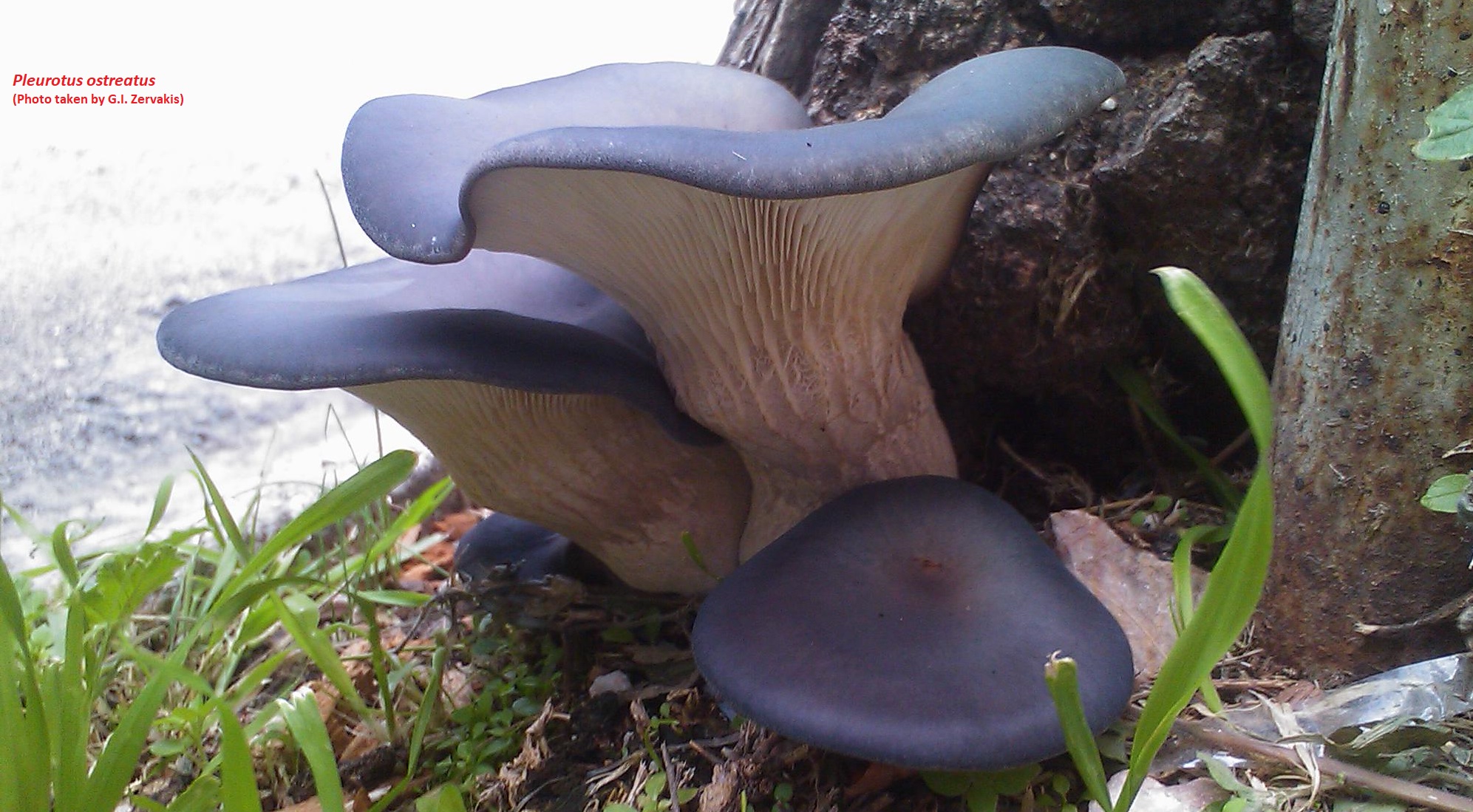
Fungi are heterotrophic microorganisms, i.e. they lack the ability to synthesize organic substances, they have solid cell walls and are lacking in motion (except for a few species that have reproductive cells with motion abilities). The body or thallus of fungi consists of thin tubular filaments called hyphae which growing-elongated epicar (filamentous fungi). The hyphae are branched in all directions, usually in the sense of radius, and they create the stem body or mycelium. However, there are also mycelium-free fungi, such as yeasts which are monocytic organisms and replicated by tagging or division.
The fungi absorb the necessary nutrients by adsorption from the outside environment through the cell wall and cell membrane. This particular feature makes them appear as microorganisms which have their ‘stomach outside their bodies’! Unlike animals do, the fungi secrete digestive enzymes in their external environment in order to break down complex macromolecules (e.g. carbohydrates, proteins, lipids) into smaller and more readily assimilable molecules, which they adsorb afterwards in to their cells.
Reproduction in fungi, as in all living organisms, leads to the creation of new individuals with the typical characteristics of the species. There are two generalized types of reproduction: the sexual and the asexual.
Most macromycetes are classified in the genus Basidiomycetes and especially in the Agaricomycotina hypophyla, which includes mycelium-forming species that produce large composite-multicellular fruitbodies, that called mushrooms. In many cases the formed fruitbodies do not have the “typical” form of mushrooms we know them, but they may be coral, gelatinous, gastric – spherical, phalloid, layered etc., or in other cases instead of blades in the fertile part to carry pores, indentations, folds etc.
In general, based on their nutritional requirements and ecological adaptations, fungi are divided into three categories:
- saprotrophic, which grow on dead organic matter and are one of the most important factors of its decomposition and recycling in nature
- parasitic, which grow at the expense of other organisms (that they are characterized as hosts and they are usually animals or plants) causing gradual attenuation or even death. The majority of them can grow in dead organic matter (‘optionally or potentially parasitic’), whereas those who can not be cultivated on synthetic substrates are characterized as obligatory parasitic
- symbiotics, which develop relationships of mutual benefit with other organisms, living independently (e.g. mycorrhizae: specific formations derived from fungal coexistence with plant roots) or by forming a new organism (e.g. lichens: organisms derived from coexistence of fungi and algae or cyanobacteria).